
FREE QUOTE CALL OR TEXT
0424 408 330
Trusted by Builders, Strata Managers & Property Owners
GET YOUR JOB BOOKED IN AND FINISHED TODAY !!
"*" indicates required fields
At Floor Levelling Sydney We Offer FREE Concrete Cancer Inspections Throughout Sydney
We provide FREE On-site Concrete Cancer Inspections across Greater Sydney, helping property owners uncover early-stage deterioration before it turns into major structural damage. Each assessment is carried out by experienced technicians who carefully examine the affected concrete to identify signs of corrosion, cracking, or reinforcement failure.
Accurately identifying why the damage has occurred is critical to preventing further spread. Once the underlying cause is confirmed—such as water ingress, insufficient concrete cover, or steel reinforcement corrosion—we recommend the most appropriate repair strategy based on the condition of the structure and its environment.
If you suspect Concrete Cancer in a residential, commercial, or strata property, get in touch with our team to arrange a no-obligation inspection. We’ll assess the problem areas, explain the recommended repair approach in plain terms, and supply a transparent quote focused on long-term durability and compliance.
10 Warning Signs That May Indicate Concrete Cancer in Your Property
1. Brown or Reddish Staining on Concrete
Streaks or patches of rust-coloured discolouration often suggest corrosion occurring within the embedded steel reinforcement — one of the earliest and most common triggers of concrete cancer.
2. Deteriorating or Powdery Concrete Surfaces
Concrete that appears chalky, rough, or worn down can absorb moisture more readily. Increased water penetration accelerates internal damage and reinforcement corrosion.
3. Cracks of Any Size
Even minor hairline cracks can allow water to enter the concrete. Over time, moisture reaching the steel reinforcement leads to rust expansion, which widens cracks and weakens the structure.
4. Ongoing Dampness or Standing Water
Areas that remain wet, show dark moisture staining, or allow water to pool—particularly on balconies or slabs—often point to drainage or waterproofing failures that contribute to internal corrosion.
5. Failed or Poorly Installed Joints
Expansion and control joints are designed to manage concrete movement. When joints are missing, deteriorated, or incorrectly sealed, the concrete can crack under stress, allowing moisture to reach the reinforcement.
6. Insufficient Concrete Cover to Reinforcement
Steel bars positioned too close to the surface are more exposed to air and moisture. Without adequate concrete coverage, corrosion can begin much earlier than expected.
7. Rusting Fixtures Connected to Concrete
Corrosion on metal elements such as balustrade fixings, handrails, or brackets can migrate into the surrounding concrete, triggering internal deterioration over time.
8. Paint That Is Lifting or Blistering
Peeling, bubbling, or flaking paint—particularly on soffits, beams, or balcony undersides—often indicates moisture trapped beneath the surface, which may be linked to deeper concrete damage.
9. Hollow Sounding Areas
When concrete produces a hollow or “drummy” sound when tapped, it can indicate delamination, where layers of concrete have separated due to corrosion-related expansion.
10. Visible Reinforcement Steel
Exposed steel bars are a serious red flag. Once the reinforcement becomes visible, significant internal corrosion has usually already occurred, requiring prompt structural repair.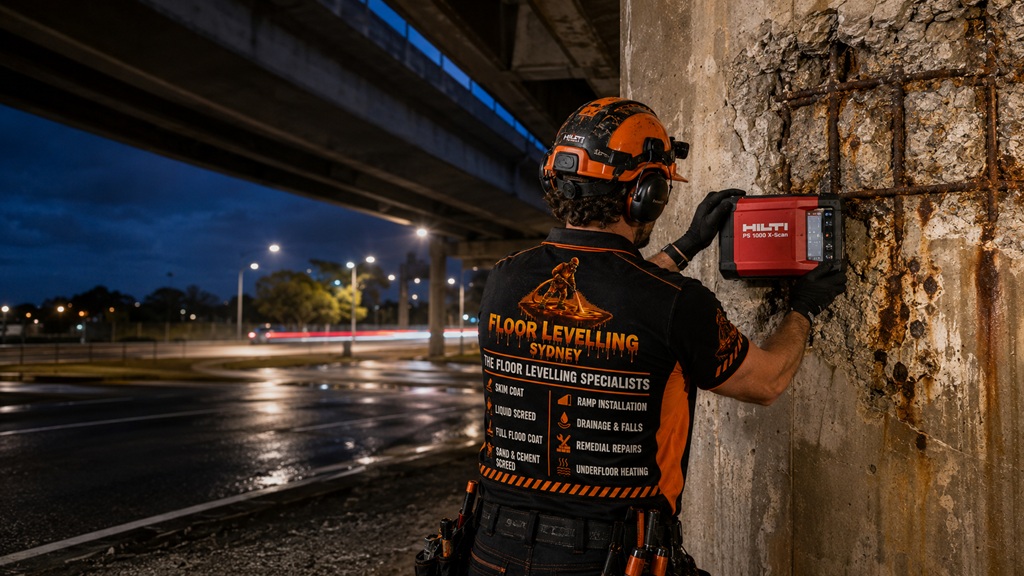
Our Concrete Cancer Repair Process
Step 1: Complimentary Site Assessment
Every project begins with an on-site inspection conducted by our specialists. We assess visible deterioration, identify risk areas, and determine the likely severity of the issue. Following the inspection, you’ll receive a clear, no-obligation quote based on the findings.
Step 2: Diagnosing the Underlying Issue
Concrete cancer doesn’t occur without a cause. We investigate the origin of the damage—such as moisture ingress, corrosion pathways, or inadequate concrete cover—and map the affected sections to determine the most effective repair method.
Step 3: Removing Unsound Concrete
All weakened, cracked, or delaminated concrete is precisely removed. The edges are cut back neatly to expose solid material, creating a stable and well-defined repair zone.
Step 4: Controlled Breakout of Affected Areas
Using low-vibration, dust-controlled equipment, we carefully remove loose concrete surrounding the reinforcement. This method protects adjacent surfaces and minimises disruption to the structure.
Step 5: Preparing the Reinforcement Steel
Exposed steel reinforcement is mechanically cleaned to remove rust, corrosion, and scale. This step is critical to ensure proper adhesion of protective treatments and long-term durability.
Step 6: Final Surface Conditioning
Both the prepared steel and surrounding concrete are thoroughly cleaned to remove dust, contaminants, and residue, ensuring optimal bonding conditions for repair materials.
Step 7: Corrosion Protection System
A high-performance anti-corrosion treatment is applied to the reinforcement, including protective primers designed to inhibit future rust formation and extend the lifespan of the repair.
Step 8: Reinforcement Replacement Where Necessary
Where existing steel has deteriorated beyond acceptable limits, new reinforcement is installed to restore structural integrity and meet engineering requirements.
Step 9: Moisture and Corrosion Shielding
An additional protective coating is applied to shield the treated steel from moisture ingress and environmental exposure, providing an added layer of defence.
Step 10: Structural Reinstatement
The repair area is rebuilt using a specialised concrete or repair mortar system. Materials are applied to the correct thickness, finished neatly, and allowed to cure fully, restoring strength, protection, and a uniform appearance.
Book A Concrete Cancer Repair Inspection In Sydney
If you have noticed cracked concrete, rust staining, exposed reinforcement, loose concrete, concrete spalling, falling concrete or moisture-related deterioration, it is important to investigate the problem before it becomes more extensive.
Floor Levelling Sydney can inspect the affected area, assess the condition of the concrete and reinforcement, identify visible signs of corrosion and provide a clear quote for concrete cancer repairs, reinforcement treatment, concrete patching or related remedial works.
Call or text 0424 408 330 or fill out or Contact Form to book a concrete cancer repair inspection in Sydney.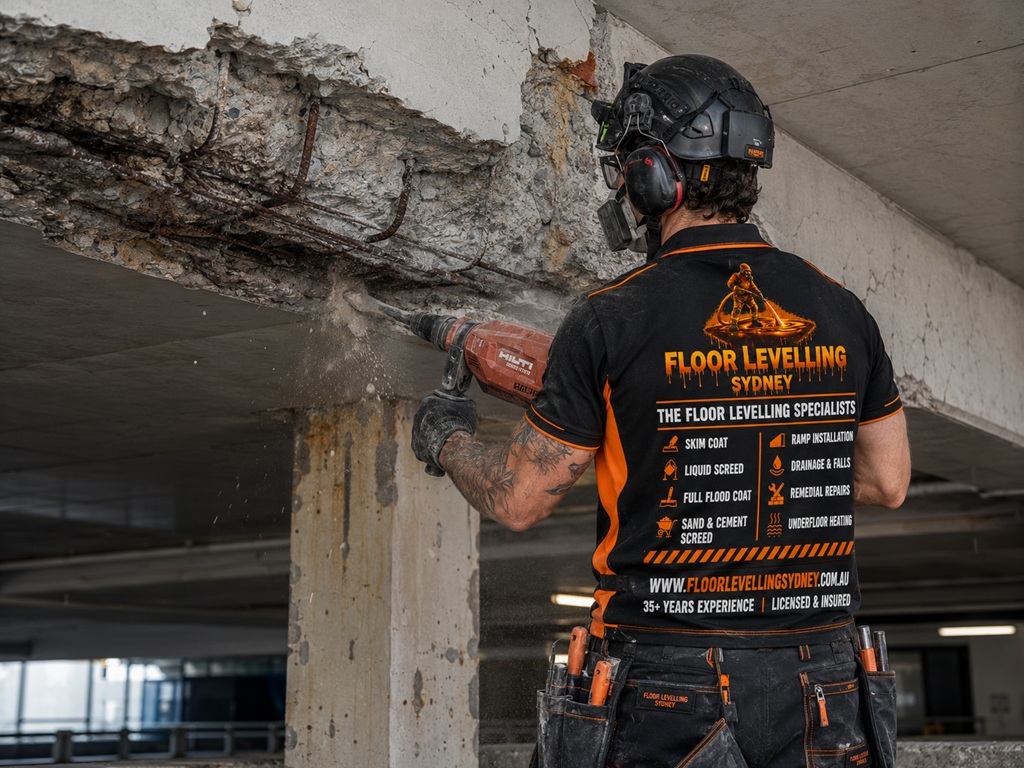
FREE QUOTE CALL OR TEXT
0424 408 330
Trusted by Builders, Strata Managers & Property Owners
GET YOUR JOB BOOKED IN AND FINISHED TODAY !!
"*" indicates required fields
"*" indicates required fields
"*" indicates required fields